Monday, 21 March 2016

The Processions of Semana Santa


  The Easter processions, with their candles, hooded habits and swaying floats are part of the iconography of Spain, and anyone who visits will want to see them at least once. Vejer holds five processions as part of the programme of Easter celebrations which also include several special masses and the Toro Embolao event on Easter Sunday. However, not all towns are the same, and in neighbouring Barbate, there will be eight processions, each with its own special character and tradition. 
  The large floats are carried by between twenty and thirty-five people directly underneath, who are concealed under drapes. When a whistle blows, they take a break, and you will see shadowy figures checking their phones or even having a crafty cigarette.
  The processions, each of which has its own special name, commemorate different episodes in the Easter story. Each one is arranged by a different hermandad (religious brotherhood) or cofradía (a trade or professional association which now has a mainly religious function.) The different robes and hoods seen at processions belong to the different brotherhoods conducting the processions, though others are also represented. Most processions are accompanied by the town band, and like everyone else, Spain celebrates Easter with flowers, an important symbol of spring and rebirth.
  Processions  usually feature a large float carrying a three-dimensional representation of Jesus, and usually one with the Virgin Mary as well. Some of these statues are old and valuable, and each Virgin appears in a different embodiment, according to which hermandad is conducting the parade.

The Virgin of the Olives plays an important part.
Photo by M&J Night photography.
  The most important day for parades is Thursday, marking the Crucifixion, though unlike Barbate, Vejer does not hold a separate midnight parade. Instead, the ten o’clock parade continues until around 2.30 a.m.
  Here’s some information about the different processions, with thanks to Miguel Ángel Romero:

Palm Sunday (Domingo de Ramos) 

  La Burrita (the Little Donkey) This procession, which in Vejer is celebrated by masses in all the churches of the area, commemorates Jesus’ arrival in Jerusalem at the beginning of Holy Week. 
  The procession is  conducted by the Cofradía de Penitencia del Santísimo Cristo del Amor, María Santísima de la Paz y Nuestro Padre Jesús en su Entrada Triunfal en Jerusalén. The Barbate procession begins at 5 p.m. and includes many children. No hood is worn in this procession, and the participants wear brown and white robes. 

Barbarte's 'La Burrita' parade, from 2011
Monday.

  Ecce Homo. This is the man).  This procession commemorates Jesus’ trial by Pontius Pilate. In Barbate, the procession takes place at 8 p.m. and the celebrants wear the official robes of the Cofradía: a light beige tunic, red cape, shoes and belt. In Vejer, the procession begins at 8.30 and takes the following route:


  Plaza del Padre Angel, Ramón y Cajal, Judería, Juan Bueno, Trafalgar, San Juan, Misericordia, Poca Sangre, Palomina, La Fuente, Plaza de España, Canalejas, Reyes Católicos, Quintanilla, Rosario, Plaza del Padre Angel y Parroquia.


Vejer's Thursday procession.
Photo by M&J Night photography.
Tuesday.

 El Huerto. (The Orchard). The procession, which does not take place in Vejer,  commemorates Jesus’ last night in the Garden of Gethsamane. It is organised by the Venerable Cofradía de Penitencia de Nuestro Padre Jesús de la Sagrada Oración en el Huerto y María Santísima de Gracia y Esperanza. The habit consists of a bone-coloured tunic, cape, hood and belt in olive green.
The procession leaves the parish church of Barbate at 8.30 p.m.

Wednesday.

Medinaceli. This procession commemorates Christ’s suffering while in prison. It is conducted by the  Hermandad de Ntra. Sra. de la Oliva Coronada, featuring an 18th century statue of Jesus in the Genovese style. It takes place in the new part of Vejer, beginning at 10 pm.

Iglesia de San Miguel, Avda San Miguel, Plaza de la Constitución, Juan XXIII, Mariscal Miranda, Alonso Clavijo, Avda. Buenavista, Diputación y su Templo.

Most processions are accompanied by the town band.
Photo by M&J Night photography.
Thursday

Ardero - The Nazarite
The procession, which commemorates the Way of the Cross, is conducted by the Venerable Hermandad de Ntro. Padre Jesús Nazareno, Maria Santísima de los Dolores y San Juan Evangelista, and features a statue of Jesus from the early eighteenth century. The robes of the hermandad consist of a purple tunic, gold belt and white cape.

The procession leaves the parish church at 10 o’clock and returns at 2.15 a.m. A similar procession takes place at 8.30 in Barbate.

Ntra. Sra. de la Oliva, Plazuela, Teniente Castrillón, Plaza Juan Bueno, Altozano, Sagasta, Santísimo, Esquina de la Pita, Juan Relinque, Plazuela, Ntra. Sra. de la Oliva y a su Templo.

Some finishing touches, Vejer. Photo by M&J Night photography.

Good Friday

Amor (love). (Barbate only)
  This moving and deeply impressive parade commemorates the Crucifixion. It is conducted in total silence with no children present. The penitents are robed in black. The procession is conducted by Cofradía de Penitencia del Santísimo Cristo del Amor y María Santísima de la Paz and leaves the parish church at 2 a.m.

The silent procession of 'El Amor' (Barbate) takes place in
the depths of the night.

Soledad (Loneliness). This procession commemorates the death and burial of Christ. It is conducted by the Hermandad y Cofradía de Nazarenos del Santisimo Cristo de la Caridad en su Santo Entierro y María Santísima de la Soledad and begins at 8.30. The robes consist of a black robe, white satin hood and a belt with five knots which symbolize Jesus Christ’s five wounds.

Ntra. Sra. de la Oliva, Plaza del Padre Ángel, José Castrillón, Plaza de España, Plaza del Padre Caro, Corredera, Plazuela, Ntra. Sra. de la Oliva y a su Templo.

Christ crucified, Vejer

Easter Sunday

Resurrection. (Barbate only). This joyful procession is replaced in Vejer by the Toro Embolao event, following an ancient custom. In Barbate, it usually begins at 12 p.m., and represents all the cofradías and hermandades.

Christ reborn (Barbate) - a joyful procession.


Saturday, 12 March 2016

Out in the campo - Finca Las Lomas Agricultural Complex

The flat green fields we can see from the Corredera.
  Like most people, I've often stood on the Corredera in Vejer and looked out over the fields below without really knowing what I was looking at, so I was delighted when Miguel Ángel Romero invited me and Enfoque Casa photographer Marcel Snyders (http://www.enfoquecasa.es) to take a look at Finca Las Lomas, the farm those flat, green fields belong to.
   The Las Lomas site, originally part of the Medina Sidonia empire, was purchased in 1900 by José Mora Figueroa y Daza, the seventh Marquis of Tamarón, who named it ‘La Finca de La Janda.’ In 1910, it passed to his eleven sons.
Drained wetlands, and now fertile growing areas.
  In 1941, José Ramón Mora Figueroa de Allimes, the father of the current owner, bought the Las Lomas holdings from his uncle and expanded the estate by adding other purchases. José was a man with a project. Since childhood, he had dreamed of draining the La Janda wetlands and converting the land into productive farmland. 
  His dream wasn't achieved easily, but by 1967, the area was finally drained using Dutch technology, and developed as high-quality farmland, part of a business empire which has made its owners one of the wealthiest families in Andalucía.  Las Lomas, stretching between Vejer and Benalup,  is now among the great latifundias of Andalucía and one of the most extensive farming organisations in Spain, a modern and highly mechanised set-up, which boasts, among other things, the largest leek-processing shed in Europe. Its cattle bloodlines are said to be the finest in Spain.
   Las Lomas was one of the sites enjoyed by General Franco, who visited every year to hunt and enjoy the prospect of a peaceful countryside. Witnesses remember him travelling slowly from Madrid with his escort, rather like a Royal Progress, and have commented on the insensitivity of his people, who, in those times of hunger, shot hundreds of animals in a single day, and joked that they were 'tired of eating'. Many local people enjoyed having their photo taken with the Caudillo.


General Franco enjoys a quiet sojourn on the hill that was made for him,
'La Cuesta de Franco'.
  While the Generalisimo usually stayed overnight in Barbate - 'Barbate of Franco' - his retinue was quartered in Vejer, earning the town the name 'Vejer of the Escort'. Las Lomas fitted so neatly into Franco's vision of a peaceful countryside, peopled with obedient and productive workers, that an artificial hill, 'La Cuesta de Franco', was built there from which he could survey this pleasant scene.    Las Lomas people were well-looked after in comparison with the impoverished campesinos in other areas, a rare example of the benevolent aspects of feudalism, and though Franquismo is now a distant memory, Las Lomas has always tried to look after its people.
  In tandem with the reclamation of the land came modernisation and mechanisation, and this intensified at the turn of the century as local workers moved away to live in other areas. The processing plant we visited was opened in 1988.


A pheasant takes its time crossing the road.
  We were warned that as we approached the finca, we should drive carefully. One of the five companies which make up the complex still organises game shooting parties for the sporting-minded. The game birds, pheasants and partridges, are plump, lazy and complacent. They don't feel the need to get out of the way when a car approaches. Rather the reverse, as a van makes daily trips around the estate to replenish their corn dishes, filling their small brains with pleasant associations.


Las Lomas doesn't use wooden packaging, but outside organisations sometimes prefer it.
  Other companies within the Las Lomas complex deal with cattle, cotton and cereal production, but we were there to see the horticultural section. The company produces a range of vegetables for export to Northern Europe, ninety percent of which end up in British supermarkets like Waitrose, Tesco, Sainsbury's and Asda. These supermarkets set high standards, and about about one third of the produce is discarded and sold on to food manufacturers for juice or other products. 


Miguel Ángel Romero with some of Las Lomas' organic produce.
  As we looked around, we marvelled at the pearly-white, perfect cauliflowers, all uniformly sized, which stood waiting for despatch to Tesco. The vegetables are packaged in the factory, so I had the rather surreal experience of seeing the grapefruit which would shortly be on sale in my local UK supermarket getting bagged and labelled in English.


Immaculate cauliflowers for export to the UK
  Miguel Ángel provided us with white coats and cheery orange caps for our visit to the factory sheds and explained to Marcel that photography was not allowed inside the processing areas. First, we saw the cold rooms, cavernous spaces wreathed in murky vapours, which are designed to maintain produce at optimum temperature and humidity. Produce normally stays in storage for one or two days before being shipped out on one of the twelve or fifteen lorries which leave the complex every day, seven days a week.

Boxes waiting to be filled with grapefruit for export.

We visited two processing sheds, where twenty or so women were skilfully separating the grapefruit which whizzed onto the belt from the chutes above. The women specialise in one particular type of produce, so their work is seasonal, though their line managers are permanent employees. Music is often played through overhead speakers, as this has been found to improve production. The space is large, high and light, a comfortable place to work, though the work itself is repetitive. Fork-lift trucks dashing in every direction lent a touch of drama to the proceedings.


  Las Lomas produces a range of vegetables including some, like parsnips and kale, which are hard to find in Spain. There's a beautifully juicy red grapefruit and spring greens, rarely seen in the shops here. Leeks are Las Lomas' biggest seller, though they weren't in season yet. Last year, Las Lomas sold 1.4 million leeks, and orders for this year are already up to 1.9 million. A chart on the wall reveals which of the women were the champion leek processers last season.


A well-organised space.
  One third of Las Lomas' output is now organic and the company recently gained an international award for environmentally responsible production. There's an all-round commitment to conservation. Rabbits are trapped and sent to feed endangered eagles, and the organisation supports several other wildlife projects. As the complex is on a bird migration route, there are no wind turbines.


The first tractor was introduced into the complex from the UK in the 1950s.
  After we'd had a look at the processing sheds, Miguel Ángel and his colleague Rafael drove us around some of the fields to look at the irrigation systems, which I'd often admired from the road. Man-made channels, fed by the River Barbate, are connected to long watering rigs which creep slowly across the fields, sprinkling as they go. Because the land is on the site of former wetlands, the water table here is high, and Las Lomas has a water supply which would last for seven years, even if no rain fell, an unlikely scenario on these Atlantic shores.


The watering machine creeps slowly across the fields, providing a carefully
metered supply according to temperature.


As we drove, small clusters of spanish sparrows flew out of the growing wheat. These birds can be elusive, so it was good to see them here in healthy numbers, as well as the large raptors hunting through the skies.  I was impressed by the height of the wheat, which was twice as high as it is in the UK in early March.


Spanish sparrows in a field of wheat.
    In the past, Las Lomas was a thriving small community, and about 150 people still live there.   There's a large manor house which accomodates the present owner, José Mora Figueroa, a descendant of the Tamarón family and also a member of the Domecq family from Jerez. A secondary school for country children was opened in 1970 and has strong links with the company, which manages an organic garden for the school and offers support to its students. And the Prince of Wales comes regularly to play polo on the competition ground. There's a lot more to that stretch of flat land than meets the eye.


For information about the birds of La Janda:
https://theresagreen2.wordpress.com/habitats/open-countrysidefarmland/la-janda/la-janda-bird-
calendar/

Thanks to Marcel Snyders for the photos.

Monday, 25 January 2016

Ángel Tinoco - Franco yes! Oil, no!

Ángel Tinoco at his shop on Juan Bueno
 I thought my recent publications about the Civil War were a bit short on local detail, so I decided to pay a call to local historian Ángel Tinoco in his shop on Juan Bueno. Could he tell me anything about local events during the period in question, around 1936 to 1955?  

 Ángel loves to talk about Vejer and its history and folklore, but on this topic, his lips are sealed.

 ‘It’s a taboo subject’, he said, adding that as the years went by, there were fewer and fewer people left who would object to having their, or their families’ stories told, and that once the floodgates were opened, there would be much to talk about.

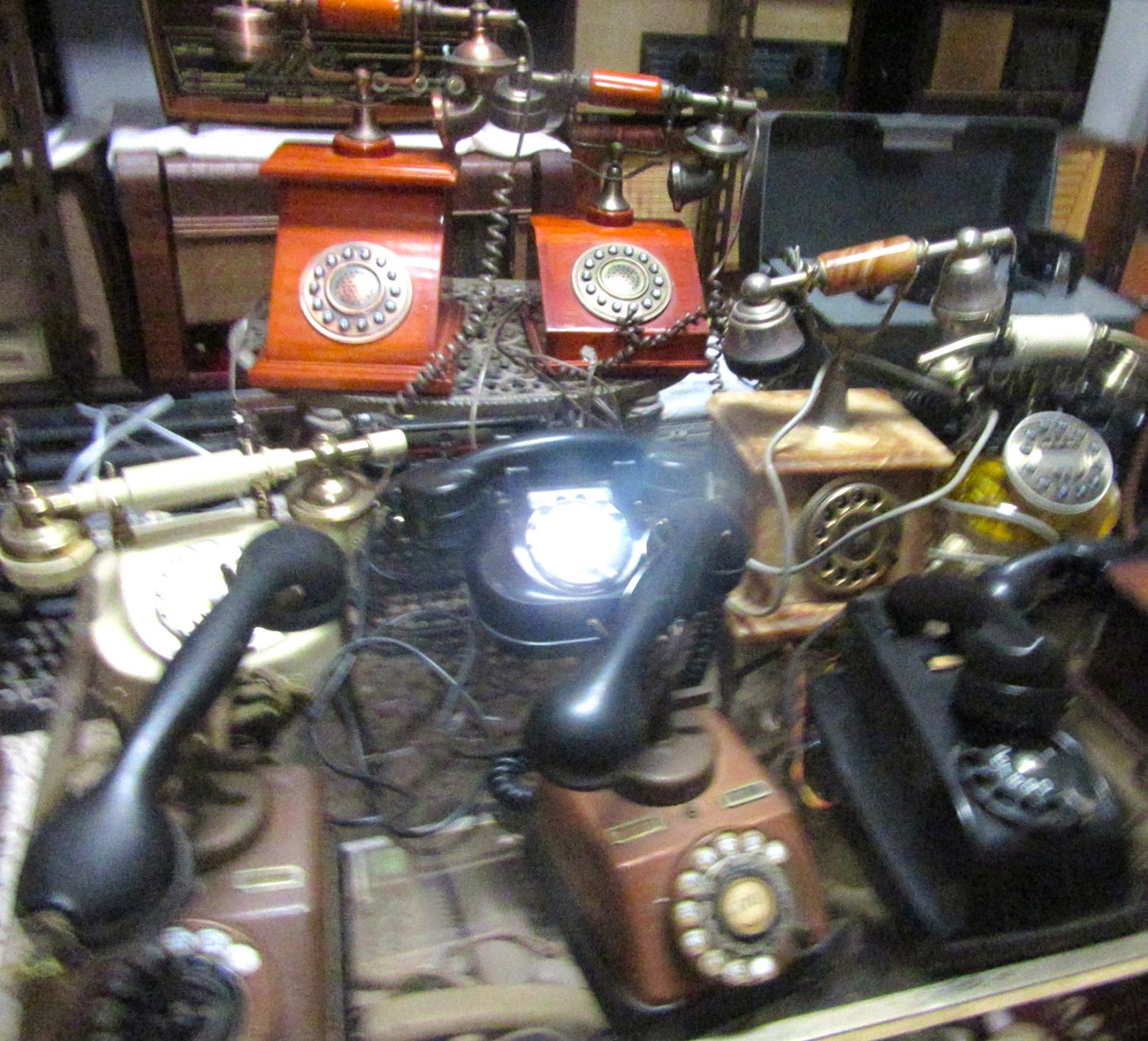
 Meanwhile, stories of the past are not the only, or even the main reason for visiting Ángel’s shop. A radio repair man by trade, he has a remarkable collection of old radios and other early machines and devices, neatly arranged in a small museum, one of Vejer’s less visible attractions but surely unique. 

A unique collection of radios from all over the world
Ángel is always pleased to show you around and answer questions, and even to sell you a fan, decorated plate or chandelier for your ceiling, as well as many other electrical objects. His shop is one of a dying breed, rooted in the days when few people travelled far and you could buy everything you wanted within a few streets of where you lived.

  His story begins in the 1920s, when his father, a cobbler, found that new, mechanised methods of shoe-making were taking over, reducing his clientéle and devastating his income.

 ‘It was a time of extreme poverty,’ Ángel explained, ‘and people were struggling just to find something to eat. Factory-made shoes were more affordable, and many people had to go without shoes altogether.’

  Ángel senior, however, was a resourceful man, and he had heard that electricity was the coming thing. He got hold of a book called ‘Electricity and its Uses’, and discovered that although mains electricity was not available in Vejer, many household items could be connected to large batteries, creating a huge saving for the householder in terms of energy and effort. The new activity helped to offset the losses he was making in the shoe trade, and the family were a little more comfortable as a result.

Electrical repars are still done in the shop
  Both Ángel and his brother were intrigued by this new technology and they subsequently trained as plumbers and electricians. The big breakthrough came in 1959, when mains electricity was installed in Vejer. Over the next decade, many young people left Spain to work overseas. The money they sent home made it possible for their families to invest in appliances like refrigerators, washing machines and televisions. 

  Ángel, meanwhile, devoted his energies to repairing these acquisitions, specialising in radios and TVs. Some, however, he could no nothing with. These were the appliances made overseas, At the time, Spain used a 110 volt current, while the rest of the world was on 120, and since conversion was not yet possible, a collection of surplus radios began to build up in his workshop, along with the occasional gramophone and sewing machine. It seemed a shame throw them away and as time went by, many of them became genuine curiosities, with an impressive international range. The nucleus of the museum began here. 

A mini juke box from China
  Meanwhile, the original cobbler’s shop was past its best. Over the years, it was rebuilt and extended, creating more living space upstairs, as well as a substantial workshop. Ángel Tinoco’s shop became the place to go for small electrical goods and repairs, and as the defunct radios threatened take over, he created his museum, unique in Vejer, and maybe unmatched anywhere.

 Though the Internet and the large electrical mega-stores now predominate, and faulty items are rarely repaired, Ángel’s shop is still trusted by older people and those in a hurry. His stock has diversified into a range of souvenirs and objects of interest, and above all, if you want information about the history of Vejer, Ángel is the man to ask. 

Historical telephones
  Although Ángel had little specific he was willing to divulge about the Civil War era, he did tell me one amusing tale from his childhood. In 1946, when Ángel was 7 years old, a demonstration, as he ironically termed it,  occurred in Vejer. It was a time of acute poverty, and many people were hungry. The only things that were not rationed, it was said, were ‘fish smoke and ginger’.

  Spanish hospitality was strained to its limits in this era, and children were warned that if they visited another house, though they might be offered food, they should always refuse it. Saying ‘yes’ might result in somebody’s going without their supper.

  Most in demand were coffee, bread, sugar and, most of all, oil. Jokes went around in whispers, comparing Franco’s Spain to a leaky old car spouting oil from every orifice, and making it clear that olive oil was the only exportable product Spain possessed. Not only that, but the proceeds were dedicated to providing luxury products for the ruling classes. Nobody cared about a little town like Vejer. 

Fidel Castro keeps company with Cary Grant
 At the time, Spain’s trade was blockaded by most of the world’s nations, in protest against Franco’s dictatorship. However, the blockade had little effect on the régime and though there were protests against the blockade, the people did not openly challenge Franco’s power.

 In those days, children liked to play out in the street when they could, but though they caused no damage, if they were spotted, the authorities made a point of chasing them home. One day, Ángel and four of his mates were playing on the steps at the bottom of Calle Nuestra Señora de las Olivas, where we now find the Café Central, when the Mayor, the Chief of the Falange and the Chief of Police came by.

Many and diverse items in Ángel Tinoco's shop
  ‘Children, don’t run away,’ they said, ‘come with us and repeat in a loud voice what we tell you.’
The children were puzzled, but felt important to be able to help the authorities. They set up the  chant as requested: ‘Franco yes, communism no!’, repeating it until it became almost like a song. The streets filled up, men, women and children, old and young, all shouting these words, not for political reasons but because it had been wrongly rumoured that anyone who joined in would get a supply of much-needed oil.

 The demonstration moved up the street to today’s Begines bar, in front of the church. The doors were closed, but Ángel was fairly sure he would find his uncle Antonio inside. And indeed, when he opened the door of the bar, it was full to the rafters with men, all chanting, not the anti-communist message the children had been told to spread, but the distinctly heretical ‘Franco yes! Oil, no!’

  Ángel Tinoco has a website, Historias de Vejer:


You can find his shop and museum on Calle Juan Bueno 26.


Wednesday, 20 January 2016

The Civil War - the Maquis, resistors of tyranny.

The Sierras - a harsh sanctuary
  ‘Maquis’ is a term which describes the guerrilla fighters of the French resistance. During and after the Spanish Civil war, it was also applied to the fighters who opposed Franco’s fascist régime. Shadowy, elusive, known only by nicknames, these were the fighters who refused to accept Franquismo, and struggled on for years to defeat a totalitarian régime. Members of the Maquis practised both large and small-scale resistance, from cutting cables and blowing up bridges to armed conflict. 

  For many years, the guerilla campaign against Franco was a taboo subject. Anyone who showed an interest in the topic was likely to lose their job or even to be imprisoned as an enemy of the state. Open discussion of the subject only became possible after a democracy was established in 1978.

The Spanish press was forbidden to report the activities of the Maquis,
but the Communist papers were willing to defy the law.
  However, the existence of the Spanish Maquis was well-known. Officially described as ‘fugitives’,  or 'bandits', to the ordinary people of Spain, they were ‘the reds’ or ‘the mountain people’. They were ‘Zaragata’, ‘el Chanca', ‘el Titi', ‘el Quinto de Coín’, ‘Pandaretas’, ‘Tabardillo’, ‘el Coripeño’ and a thousand others, lovingly or angrily nicknamed.

The Guardia Civil kept a 'hit list' of wanted guerrillas.
  After the Civil War ended, the Maquis entered into folklore. Bandits, maquis and those scary harvesters of human flesh, the sacamantecas, were all lumped together in story and legend until Manuel Pérez Regordan of Arcos de la Frontera decided to bring the subject into the open. He began to ask questions in his local area, persuaded sometimes reluctant witnesses to share their memories and in 1987, finally published ‘El Maquis en la Provincia de Cadiz’, a record of the members of the Cádiz Maquis and their activities.

The Province of Cadiz was one of the centres of Maquis activity.
    Resistance to Franco’s Nationalist rebellion began as early as in 1936, when ‘The Army of the Reconquest’ challenged Nationalist occupation of towns in Galicia and León. In response, the Nationalists gave XIV Army Corps the responsibility for suppressing opposition. Many of the corps’ activities were focused on Andalucía, where a tradition of anarchism gave an edge to protest. Francisco Gómez ‘El Cerreño’ escaped captivity in 1936 and formed an organisation whose activities ranged across the whole of Andalucía until he was detained in 1949 and sent to France. Four guerrillas under the orders of ‘Tabarrito’ created mayhem in Granada until 1942, when they were killed in a confrontation with the Army.
The first generation of guerillas was composed mainly of fugitives from Franco’s justice. After the fall of Huelva on July 29th 1936, almost a thousand Republican soldiers remained in the area, gradually dispersing into the mountains, where they formed themselves into guerrilla groups. Gradually, the groups of outlaws became more organised, and by the nineteen forties, their efforts were directed towards overthrowing the régime. 

Women guerrillas ready for combat.
  The Province of Cadiz, particularly the Sierra de Cádiz, was an important centre of guerrilla activity. The first recorded guerrilla action taken in Cádiz Province occurred in January 1940, when ‘Majada de Hornillo’ and ‘Viña de Padilla’ attacked Jimena de la Frontera. An armed confrontation with the Guardia Civil took place later that year in Benaocaz.

  Despite publicly minimising the Maquis’ political impact, the government privately recognised them as guerrillas fighting against the régime, and pursued them without mercy. As the Maquis proliferated,  the government tried at first to suppress them by the use of military force. However, it soon became clear that such an elusive enemy could not be contained by conventional means, and the Guardia Civil, with its local knowledge and ruthless methods, was given the job of dealing with the guerillas. Much of what we know about the guerrilla resistance to Franco’s régime comes from records made by Roger Oliete Navarro, who rose to the rank of Lieutenant General of the Guardia Civil. 

The Guardia Civil's work was glamorised in art and literature.
Members of the Civil Guard on duty.
The word ‘Maquis’ entered the Spanish vocabulary in 1944, when an infiltration of Spanish Republican exiles was organised in Toulouse with the ultimate ambition of overthrowing Franco’s government. The forces, led by Colonel Vicente López Tovar, first established themselves at Foix in the Pyrenees, intending to gather support among the local people, prior to launching an attack. Around 10,000 people prepared themselves to confront the régime. The attack only lasted for ten days before being defeated by the combined forces of the Army, the Guardia Civil and the Carabinieri. Three hundred were taken prisoner and the remaining survivors dispersed in the mountains, from where they would continue to fight a guerilla campaign.

Waiting for action in the Sierra.
  Despite what the régime wanted people to think, resistance to Franco was not a matter of a few ‘fugitives’, but an organised movement with strong links and cohesion. Many guerrilla groups had a distinctly political orientation, reflecting the ideals which had informed Republicanism from the outset. In Ronda, the ‘Stalingrad Guerrilla Group’ was founded in 1943, not to be confused with the 25-strong ‘Antifascist Guerrilla Group’, founded in Seville in 1949. 

Franco's press were not allowed to report on the Maquis' political context
  The different factions of the left managed to resolve most of their differences in 1945, when the ‘National Union of Antifascist Guerrillas: Southern Section’ was formed, to be followed by the ‘Alliance of Democratic Forces’ in 1946, led by Bernabé López Calle, with a base in the Campo de Gibraltar. All these groups possessed written statutes and organisational structures. In 1945, the defeat of Fascism in Germany led many to believe that Fascism’s last hour had come. Guerilla activity halted for a while, but when nothing changed, the Maquis resumed their activities. 


La Cueva de los Maquis in Castellar was a favourite mountain refuge
  The town of Alcala de los Gazules was a local centre for the activities of the maquis. From its heights, Vejer and Medina Sidonia are clearly visible, as well as a large part of the Straits of Gibraltar. Other mountain villages saw concentrated guerrilla activity, including nearby Arcos de la Frontera, Medina Sidonia, Castellar, Jimena and Cortes. Several groups were organised from Jerez. The famous Arcos guerrilla leader, Miguel García Parra, was featured in a Carnival ‘comparsa’ in 1948:

‘The twenty second of September,
We will always remember
The pistoleros came
For Miguelito García.
They took him from his house
To steal his money
And his mates’ money too
To give to the priest.
Don Miguel said
‘If you want me to come
Ride with me to the farm
And seizing the moment,
Courageous and valiant
He ran from those thieves,
Those murdering villains.


  The coastal towns did not see as much guerrilla actions as those in the mountains, for obvious reasons, and what activity occurred was often recorded as simple crime, without any political context. However, there can be no doubt that Vejer was involved with resistance groups. In May 1941, one guerrilla, José Ramos Olivete ‘The Pirate of Vejer’, was caught with two other rebels while robbing a flour factory in Alcalá in1941, and subsequently executed at Jerez. Flour was in constant demand among the guerillas, and fighters would go to any lengths to obtain it. On18th May 1949, a Vejer shopkeeper, Demófilo Vitorique Merino, received an anonymous demand under threat, to deliver certain objects to the Maquis. He reported the matter to the civil guard who arrested Valentín López López, Francisco Aguayo Navarro and Luis Cardoso García.

  As I said at the beginning of this article, it was customary for the régime to minimise the activities of the Maquis, and to pass off their activities as simple crime. It was easy to do this, because most guerrillas engaged without scruple in robbery and even kidnapping to achieve their ends. One amusing story recounts how a child was kidnapped by a leader of the Maquis. The only response came from a local shop, which complained bitterly that its supplies of chocolate had been depleted. After he had been ransomed, despite repeated questioning, the boy refused to betray his abductors, who he said had treated him ‘very kindly’.

A woman mourns a guerrilla shot by the Guardia Civil
  The operations of the Maquis would have been impossible without the support of the ‘enlaces’, (links) the women and men who lived as normal citizens in the towns and villages and provided the guerrilla fighters with supplies and information. If caught, they were punished as severely as if they had taken part in the fighting, and although we cannot quantify their part in the struggle against Franco, for every guerrilla fighter, there were several more working secretly within the community. Many were women, the wives or sisters of the guerillas, but many men were also involved. About 20,000 people were executed for helping the Maquis, and so many people were placed in concentration camps and gaols that Franco’s Spain has been described as ‘one immense prison’.

Some of the most unexpected people acted as enlaces for the fighters.
 Despite their best efforts and an enormous amount of sacrifice, the Maquis never managed to defeat Franco. The forces ranged against them were well-armed and numerous, and they had no compunction about using torture and intimidation to weaken support in local communities. The Guardia Civil laid many towns to waste in order to root out ‘traitors’.By the mid 1950s, the American presence in Spain had kick-started the failing economy and a new generation had grown up which had never known life before Franco. The régime produced stability, albeit at the expense of freedom, and repression became the new normal. Many older people today look back with nostalgia on a time when ‘moral’ standards were enforced and conservative values upheld.

  Thousand of Maquis were killed during the period of resistance, and many others imprisoned. The lucky ones were able to escape, and many returned to Spain when the fuss had all died down. The real number of deaths will never be known. Too many were summarily executed and buried without honours. The deaths are recorded only in local legend.

A plaque commemorates guerrillas shot at the roadside and buried in an unmarked grave
As well as fighting in the Spain, the Spanish Maquis made a contribution to the efforts of the French Resistance during the second world war. Martha Gellhorn wrote in The Undefeated (1945):

"During the German occupation of France, the Spanish Maquis engineered more than four hundred railway sabotages, destroyed fifty-eight locomotives, dynamited thirty-five railway bridges, cut one hundred and fifty telephone lines, attacked twenty factories, destroying some factories totally, and sabotaged fifteen coal mines. They took several thousand German prisoners and - most miraculous considering their arms - they captured three tanks. In the south-west part of France where no Allied armies have ever fought, they liberated more than seventeen towns."


Two ex-Maquis reminisce, 1980s